How a Criminal Defense Lawyer in Lafayette LA Challenges Unlawful Searches

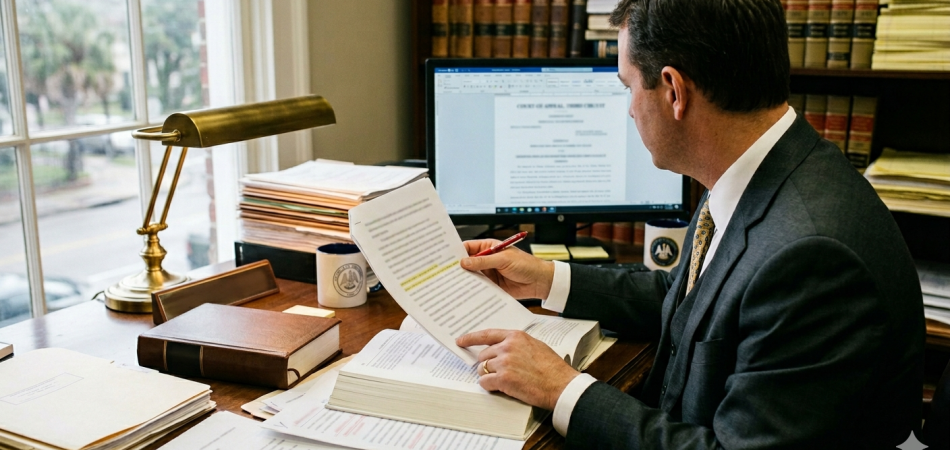

Police searches often look routine from the outside. A patrol car on the shoulder, flashing lights in a driveway, a knock at an apartment door, a warrant served at dawn. Yet many of the most important fights in a criminal case begin long before anyone argues guilt or innocence. They begin with a narrower question: did law enforcement have the legal right to search at all?
That question matters more than most people realize. If officers found drugs, firearms, phones, cash, or statements only after violating the Fourth Amendment, the defense may be able to ask the court to suppress that evidence. In practical terms, suppression can change everything. A charge may be reduced, key evidence may be excluded, leverage may shift in plea negotiations, or a case may collapse entirely.
A seasoned Criminal defense lawyer Lafayette LA residents trust does not treat a search as a background detail. The search becomes a central event to reconstruct, test, and challenge. Every minute leading up to it matters. Every word spoken matters. The exact location of a vehicle, the angle of an officer’s body camera, the wording in a warrant affidavit, the timing of a canine sniff, the line between a request and a command, all of it can become decisive.
The search is rarely as simple as the police report suggests
Police reports are written to justify police decisions. That does not mean every report is false, but it does mean every report is selective. Officers often summarize a stop in a handful of phrases that sound legally sufficient on paper: suspicious movement, nervous behavior, odor of marijuana, consent given, contraband in plain view. Those phrases carry weight in court because they map neatly onto recognized legal exceptions to the warrant requirement.
The defense lawyer’s job is to slow that story down.
Take a common traffic stop in Lafayette Parish. The report may say the driver was weaving, appeared unusually nervous, and consented to a search after a brief conversation. The officer then claims to have found a firearm under the seat and narcotics in a backpack. On paper, that reads cleanly. But once body camera footage is reviewed, a different picture can emerge. Perhaps the weaving was minimal or nonexistent. Perhaps the driver was ordered out and patted down before any meaningful conversation occurred. Perhaps the request for consent came after the purpose of the stop had ended. Perhaps several armed officers surrounded the car while repeating the request until the driver gave in.
That is where unlawful search litigation lives, in the gap between the report and the real sequence of events.
What the Constitution protects, and what it does not
The Fourth Amendment protects people against unreasonable searches and seizures. Louisiana courts apply those principles through both federal and state law. Still, the rule is not as simple as “police need a warrant.” In daily criminal practice, many searches happen under claimed exceptions to the warrant requirement.
A defense lawyer challenging a search needs to understand not just the broad rule, but the exceptions officers rely on most often. Consent searches, searches incident to arrest, vehicle searches, probation searches, protective sweeps, plain view seizures, exigent circumstances, and inventory searches each have their own legal standards. The standards overlap, and officers often invoke several at once when one justification looks weak.
That is why the strongest defense work is highly factual. Law is the framework, but facts win suppression hearings.
Traffic stops are fertile ground for suppression issues
In Lafayette, as in the rest of Louisiana, many criminal cases begin with a vehicle stop. A broken taillight, an allegedly improper lane change, expired registration, a call from another officer, or a hunch dressed up as a traffic violation. Once the stop begins, officers often look for reasons to expand it.
The Constitution allows police to stop a vehicle when they have a lawful basis, but the scope and duration of that stop still matter. An officer cannot lawfully prolong a traffic stop just to fish for unrelated criminal evidence unless new facts arise that create independent reasonable suspicion.
That sounds technical, but it is often the heart of the case. Suppose a driver is stopped for speeding. The officer checks license, insurance, and registration. The warning ticket is ready. At that point, the lawful mission of the stop is basically complete. If the officer then keeps the driver on the roadside to wait for a drug dog without valid additional suspicion, the continued detention may be unlawful. If the dog alerts and officers find contraband, the defense may move to suppress everything found after the improper extension.
Body camera timestamps are critical here. So are dispatch logs and dash cam recordings. A difference of three or four minutes can matter. Good defense lawyers do not accept an officer’s broad statement that the detention was “brief.” They build a timeline second by second.
Consent is one of the most contested issues in search cases
Police love consent searches because consent can make a warrant unnecessary. But real consent must be voluntary, and that is a fact-intensive inquiry. Courts look at the totality of the circumstances, including whether the person felt free to refuse, whether officers used intimidation, whether the person was restrained, whether language barriers existed, and whether officers made misleading statements about their authority.
In practice, many so-called consent searches sit in a gray area. People standing on the side of the road, facing multiple officers, often do not feel free to say no. A person may hear, “You don’t mind if I take a look, right?” and understand that as an order. Others consent because they believe refusal will make things worse.
A criminal defense lawyer in Lafayette LA will usually look for several pressure points in a consent case:
- whether the stop or detention was already unlawful before consent was requested
- whether the officer’s tone and wording implied that compliance was mandatory
- whether the person was handcuffed, boxed in, or physically separated from others
- whether the consent was limited, then exceeded by the officers
- whether video or audio contradicts the report’s claim of clear permission
One recurring issue is scope. A person might agree to let officers “look in the car,” yet officers then dismantle panels, open locked containers, or search digital devices found inside. Even valid consent has boundaries. A lawyer who identifies where officers crossed those boundaries may be able to suppress what was found beyond them.
Warrants are not immune from challenge
People often assume a signed warrant ends the argument. It does not. Judges sign warrants based on what officers present in affidavits, and those affidavits can be incomplete, misleading, stale, or legally insufficient.
A strong suppression challenge may attack the warrant on several fronts. Did the affidavit actually establish probable cause, or did it rely on vague suspicions and boilerplate language? Was the information too old to support a present search? Did officers omit facts that would have undermined probable cause? Was the place to be searched described with enough precision? Did the warrant authorize an overly broad search?
These challenges matter in drug investigations, gun cases, and digital evidence cases alike. Search warrants for phones deserve especially close scrutiny. Modern phones contain location data, photos, messages, browsing history, financial records, and access to cloud accounts. A vague or overbroad warrant can function like a general rummaging tool, which is exactly what the Fourth Amendment was designed to prevent.
Experienced defense lawyers often compare the affidavit to every other available source: body camera footage, surveillance, dispatch records, witness statements, and forensic timelines. If an officer claimed a confidential informant saw drugs in a home within the last 48 hours, but other records suggest the target was out of town, that discrepancy matters. If the affidavit portrays the suspect as the sole occupant, but utility records and lease documents show a multi-resident household, that can affect probable cause and standing arguments.
Homes receive the strongest protection, but officers still push the edges
Courts traditionally give the home the highest level of Fourth Amendment protection. Even so, many unlawful searches happen in and around residences because officers rely on urgency, consent, or plain view to enter without a valid warrant.
The threshold issue is often entry. Did police step inside because someone clearly invited them, or did they edge past the doorway while talking? Did they smell marijuana from outside and use that as a basis for immediate entry? Did they claim concern for safety, destruction of evidence, or the need to conduct a “protective sweep” after an arrest?
A lawyer challenging a home search will often focus on exactly where officers were standing and what they could lawfully perceive from that location. The front porch may be open to a knock and talk, but that does not automatically authorize wandering around the side yard, peering through windows, or entering a backyard not open to the public. Small physical movements by police can carry major constitutional consequences.
I have seen cases hinge on details that sound minor at first. An officer writes that the apartment door was open, but body camera footage shows it was only cracked a few inches. A report says the resident stepped aside and allowed entry, yet the audio captures no request and no express permission. The state argues exigent circumstances based on possible destruction of evidence, but officers spent ten calm minutes outside before going in. Those details can undercut the government’s entire theory.
The plain view doctrine is narrower than officers often suggest
“Plain view” sounds straightforward. If an officer is lawfully present and immediately recognizes an item as evidence or contraband, the officer may be able to seize it without a warrant. The doctrine is real, but it is frequently stretched beyond its limits.
For plain view to apply, the officer must first have a lawful right to be where the observation occurred. That seems obvious, but it is often disputed. If the officer unlawfully prolonged a traffic stop, unlawfully entered a home, or unlawfully moved an object to improve the view, the doctrine may not save the seizure.
There is also the question of immediacy. If the incriminating nature of an object was not apparent without further manipulation, the state may have a problem. A closed opaque container is not contraband simply because it exists. Neither is a phone, cash bundle, or prescription bottle. Officers cannot transform a hunch into plain view by opening, squeezing, or repositioning items without legal authority.
Digital searches have become a major battleground
Many criminal investigations now rise or fall based on phone evidence. Texts, social media messages, GPS histories, photographs, and app data often tell prosecutors more than any witness can. That makes digital search challenges especially important.
A phone search can be unlawful in several ways. Officers may seize the device legally during an arrest, but then search its contents without a proper warrant. The warrant may be overly broad, asking for essentially everything on the phone without tying categories of data to the alleged offense. Extractions may also sweep in material far beyond the relevant date range.
Good defense work in these cases requires technical literacy. A lawyer needs to understand what the forensic report actually shows, how the data was collected, whether cloud content was separately obtained, and whether the state can prove who used the device at a given time. Not every message on a phone belongs to the defendant in any meaningful evidentiary sense. Not every location point is reliable to the meter. And not every warrant that mentions “electronic communications” satisfies constitutional particularity.
In Lafayette courts, as elsewhere, judges increasingly see these arguments. The lawyers who do best are the ones who can explain digital overreach in plain language without oversimplifying the law.
Standing can decide whether the challenge gets heard
Before a court Criminal defense lawyer Lafayette LA even reaches the legality of a search, the defense often must show that the accused had a privacy interest affected by the police conduct. This issue, sometimes called standing in everyday practice, becomes complicated fast.
A passenger may challenge the legality of a traffic stop, but not always every aspect of a vehicle search. A visitor in someone else’s house may or may not have a protected privacy interest depending on the circumstances. A person using a borrowed car may face questions about lawful possession. Shared phones, hotel rooms, and short-term rentals raise their own issues.
This is one place where early investigation matters. Lease documents, overnight guest evidence, text messages with the property owner, insurance records, or testimony about who regularly used a vehicle can all shape the court’s analysis. Defense lawyers who treat standing as an afterthought sometimes lose strong suppression claims before the merits are ever reached.
Suppression motions are built, not improvised
A solid suppression motion is not just a legal memo with case citations. It is the product of disciplined case building. By the time the hearing arrives, the lawyer should know the timeline better than the officers do.
That means gathering every available record. Dispatch audio can reveal when backup was called and why. CAD logs can show whether suspicion arose before or after a detention was extended. Body camera footage often captures tone, confusion, hesitation, and coercion that a transcript alone misses. Photos from the scene can test whether Criminal defense lawyer Lafayette LA Ikerd Law Firm an officer truly had the claimed line of sight. Medical, educational, or language-related records may help explain why a client’s “consent” was not truly voluntary.
The best cross-examinations in suppression hearings usually look simple from the gallery. They are not. They are precise, patient, and built around documents and timestamps the witness cannot easily escape. Rather than arguing with an officer in broad terms, a skilled lawyer often narrows the ground inch by inch.
“Your report says consent was immediate. The body camera shows forty-seven seconds of silence after the request, correct?”
“You wrote that my client was free to leave. Why was his license still in your hand?”
“You testified the odor came from the vehicle. Which window was open?”
“Where in your affidavit did you tell the judge the informant had failed reliability checks before?”
Those questions work because they are anchored in proof, not theater.
Prosecutors often defend a search with fallback theories
When the original justification for a search starts to crack, the state rarely gives up with it. Prosecutors often advance alternative theories. If consent looks weak, they may argue inevitable discovery. If the stop was prolonged, they may claim independent reasonable suspicion arose midway through. If a warrant is attacked, they may invoke good faith.
A capable defense lawyer anticipates those pivots early. Good faith, for example, can be powerful in warrant cases, but it is not unlimited. If the affidavit was so bare that reliance on it was unreasonable, or if officers materially misled the issuing judge, the state may not get the benefit of that doctrine. Likewise, inevitable discovery cannot rest on speculation. Courts should require a credible, lawful path by which the evidence truly would have been found.
This is where judgment matters. Not every technical irregularity is worth major courtroom energy. Some arguments sound clever but distract from stronger ones. A lawyer with real suppression experience knows when to press a narrow factual contradiction and when to build a broader constitutional challenge around a pattern of overreach.
Local knowledge matters in Lafayette
Search issues do not arise in a vacuum. They play out in specific courts, before specific judges, with local law enforcement practices and recurring fact patterns. A lawyer who regularly handles felony and misdemeanor cases in Lafayette Parish learns how certain stops are commonly documented, how local agencies use body cameras, what kinds of search warrant language appear again and again, and which factual disputes tend to move a particular court.
That local familiarity can shape strategy in subtle ways. One judge may want the timeline laid out with meticulous precision before hearing broader legal argument. Another may focus quickly on whether the officer had a lawful reason to extend the encounter. Some prosecutors are more willing to negotiate after a strong suppression filing; others wait to see how witnesses hold up on the stand.
The phrase Criminal defense lawyer Lafayette LA is not just a search term people type into Google when they are scared. It points to something practical. Local defense work is local knowledge, local procedure, local habits, local credibility. When unlawful search issues arise, those things matter.
What clients should do after a questionable search
People often hurt their own cases by trying to explain too much too early. After a search, panic takes over. They call relatives, post online, delete messages, or contact officers directly to “clear things up.” Those moves can create new problems and rarely solve the original one.
The better course is simple:
- do not consent to additional searches
- do not discuss the facts with police without counsel
- preserve anything that may help reconstruct the event, including citations, bond paperwork, photos, and names of witnesses
- write down your memory of the encounter as soon as possible
- speak with defense counsel quickly, while records and footage are still easier to obtain
Memory changes fast. Video can be lost or overwritten. Witnesses become hard to find. In suppression litigation, delay has real costs.
Why unlawful search challenges can reshape the entire case
Some criminal cases are trial cases. Many are not. But even when a case ultimately resolves by dismissal, reduction, or negotiated plea, a strong challenge to an unlawful search can be the reason the outcome improves.
That is because suppression motions affect leverage. If the prosecution’s best evidence is shaky, settlement posture changes. If officers know they will face a detailed cross-examination about a stop, reports may be read more carefully by everyone involved. If the court suppresses a confession or physical evidence, the state may be left with far less than it had assumed.
There is also a deeper point. Fourth Amendment litigation is not just procedural fencing. It enforces boundaries on government power. Most people never expect to need those boundaries until the day flashing lights appear in the mirror or officers show up at the door. By then, the only question is whether someone on the defense side knows how to test what happened and challenge what was not lawful.
That is the real work. Not slogans, not outrage, not magic words. Careful factual reconstruction. Sharp constitutional analysis. Relentless attention to detail. When a search crosses the line, that is how a criminal defense lawyer in Lafayette LA challenges it, and sometimes that is how a case changes course.
Ikerd Law Firm
600 Jefferson St Ste 903
Lafayette, LA 70501
(337) 366-8994
FAQ About Criminal defense lawyer Lafayette LA
How much does a criminal lawyer cost in Louisiana?
Fees vary with the charges, complexity, expected work, and attorney's experience. Ask for a written fee agreement explaining the services included, payment schedule, and any separate expenses before hiring counsel. An initial consultation can help clarify the likely scope and cost of representation.
Who is the best criminal defense attorney in Lafayette, LA?
There is no single attorney who is the best fit for every case. Look for a Louisiana-licensed lawyer with experience handling similar charges, clear communication, and a fee arrangement you understand. Discuss the lawyer's approach during a consultation, and be cautious of anyone who guarantees a result.
How to afford a criminal defense lawyer?
Ask prospective attorneys about their fees and whether payment arrangements are available. If you cannot afford representation, ask the court or local public defender's office how to apply for appointed counsel. Eligibility depends on your finances, the case, and applicable requirements; appointment is not automatic.